Is Screen Time Affecting Your Child’s Eyes?
 Screens have become a huge part of children’s everyday lives. From learning to entertainment, including social media, video chatting, online homework and virtual classes, nearly their entire world lives on a screen.
In a survey from July 2021 to December 2023, the Centers for Disease Control (CDC) and Prevention found that half of adolescents aged 12 - 17 had at least four hours of screen time per day. With this amount of screen time used by children and adolescents, teachers and parents alike are asking the question: how are screens affecting children’s vision?
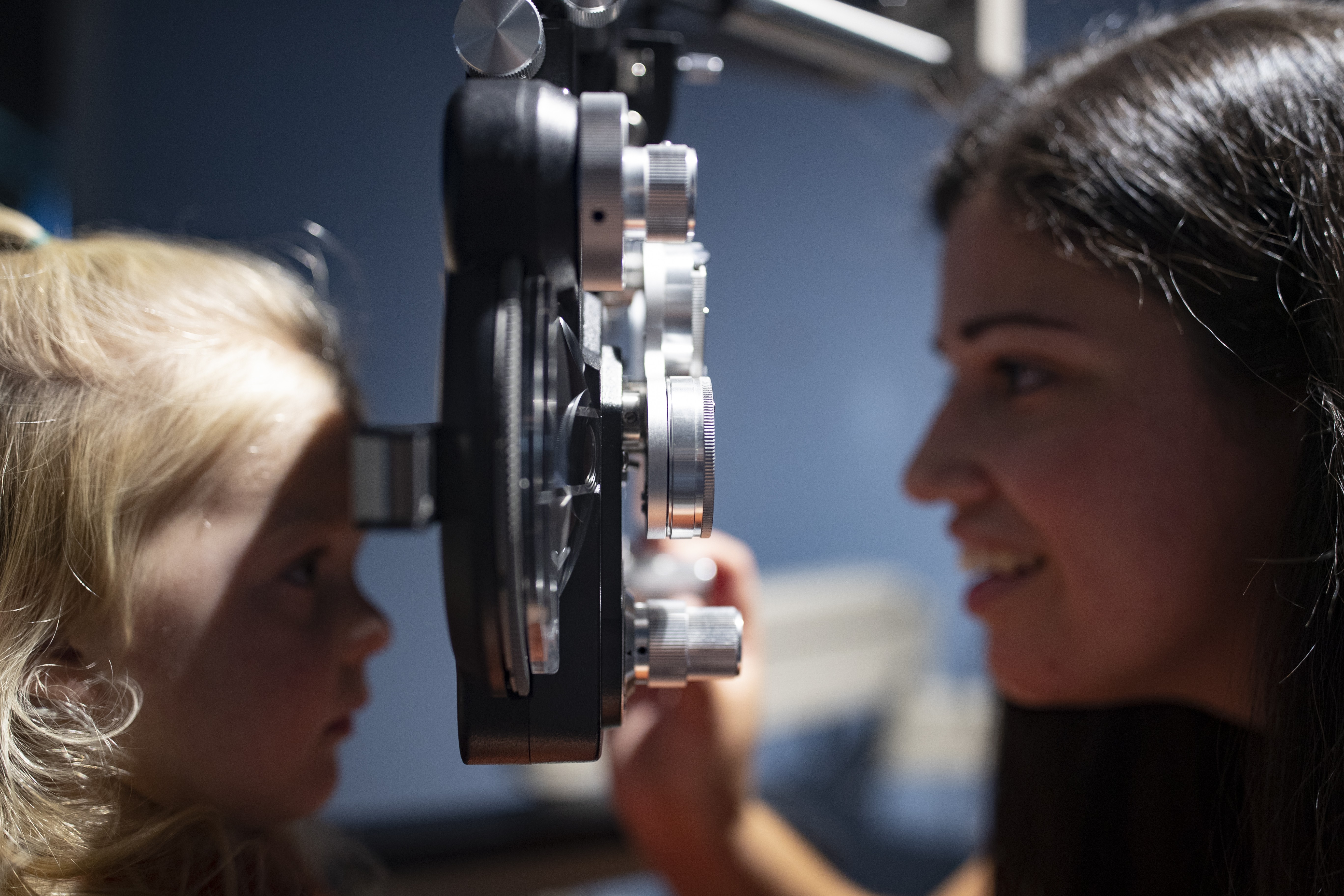 Expert eye doctors at The Eye Institute (TEI) of Drexel University are well aware of these concerns and are here to help parents and guardians set manageable and safe screen limits for children.
The American Academy of Pediatrics (AAP) recommends no screen time for children younger than 18 months and no more than one hour per day of educational or high-quality screen time for children ages 2 to 5. There are no specific recommendations for children age 6 and up, but the AAP recommends encouraging limited screen time that does not interfere with sleep or physical activity.
Excessive screen time during children’s prime developmental years has been linked to increased risk of developmental disorders, sleep difficulty, ADHD, obesity, and eye problems. Dr. Stanley Hatch, chief of the Pediatrics and Binocular Vision Department at TEI, has extensive experience in the subject of screen time and vision issues in children.
In his 2024 study “Trends in Childhood Myopia in an Urban U.S Clinic Population During the COVID - 19 Pandemic,” Dr. Hatch found significant increases in childhood myopia (near-sightedness). Most disturbing was the 24 percent to 36 percent increase among 5-year-olds, most of whom have not yet learned to read.
Dr. Hatch believes earlier exposure to digital devices and the transition from in-person to virtual learning may have led to these increases.
Other eye problems, such as dry eye, eye-focusing (accommodative) problems and eye-teaming problems (e.g. convergence insufficiency) have also been associated with screen time in children. Dr. Hatch attributes these harmful effects to increased near work such as reading and screen use, and less time spent outside.
 As Dr. Hatch mentioned in his research, a common eye condition linked to excessive screen time in children is a condition called myopia, also known as nearsightedness. In myopia, the eye has grown to be longer than it should be, which causes blurry vision when looking far away. High levels of myopia also increases the risk for other eye problems such as retinal tears or detachments, glaucoma, and amblyopia (lazy eye).
A 2024 National Library of Medicine study assessing the connection between digital screen time and myopia found an increased odds of myopia per hour of daily screen time in children. Signs of myopia in children include the following:
- Holding reading material very close to their face
- Sitting close to the television
- Squinting
- Eye rubbing
- Frequent headaches
If you are concerned about your child’s vision, the Pediatrics and Binocular Vision Department at The Eye Institute can help. Myopia can often be managed with treatments that can help slow the progression including contact lenses, eye drops, and glasses. In addition to reducing screen time, another easy preventable measure TEI’s experts recommend encouraging children to spend more time outdoors. Research has shown that one to two hours outside per day can reduce the progression of myopia in children.
Another eye condition related to excessive screen time in children is dry eye. When you look at a screen for an extended period of time, your eyes naturally blink at a slower rate due to the high amount of visual stimulation. A slower blink rate can lead to dry, irritated, and itchy eyes.
To prevent this, doctors at TEI recommend reducing excessive screen time whenever possible and implementing the 20/20/20 rule: every 20 minutes, take at least a 20 second break, and look at something at least 20 feet away. This rule can help reduce some of the dryness related to the excessive screen time, but if your child is struggling with symptoms of dry eye such as tearing, burning, itching, or fluctuating blurry vision, try artificial tear eye drops and schedule an appointment with one of our doctors.
Lastly, excessive screen time in children can lead to:
- Headaches
- Eye strain
- Double vision
- Blurry vision
- Neck and shoulder pain
This is more often seen in adolescents and older children because they tend to spend more time on the computer than younger children due to academic demands and social networking.
If you think your child is encountering difficulties, encourage limiting their screen time and schedule an appointment with a pediatric doctor at TEI to discuss treatment options by calling 215.276.6111.