Don’t Be Afraid to Ask Your Eye Doctor: A Five-Question Series
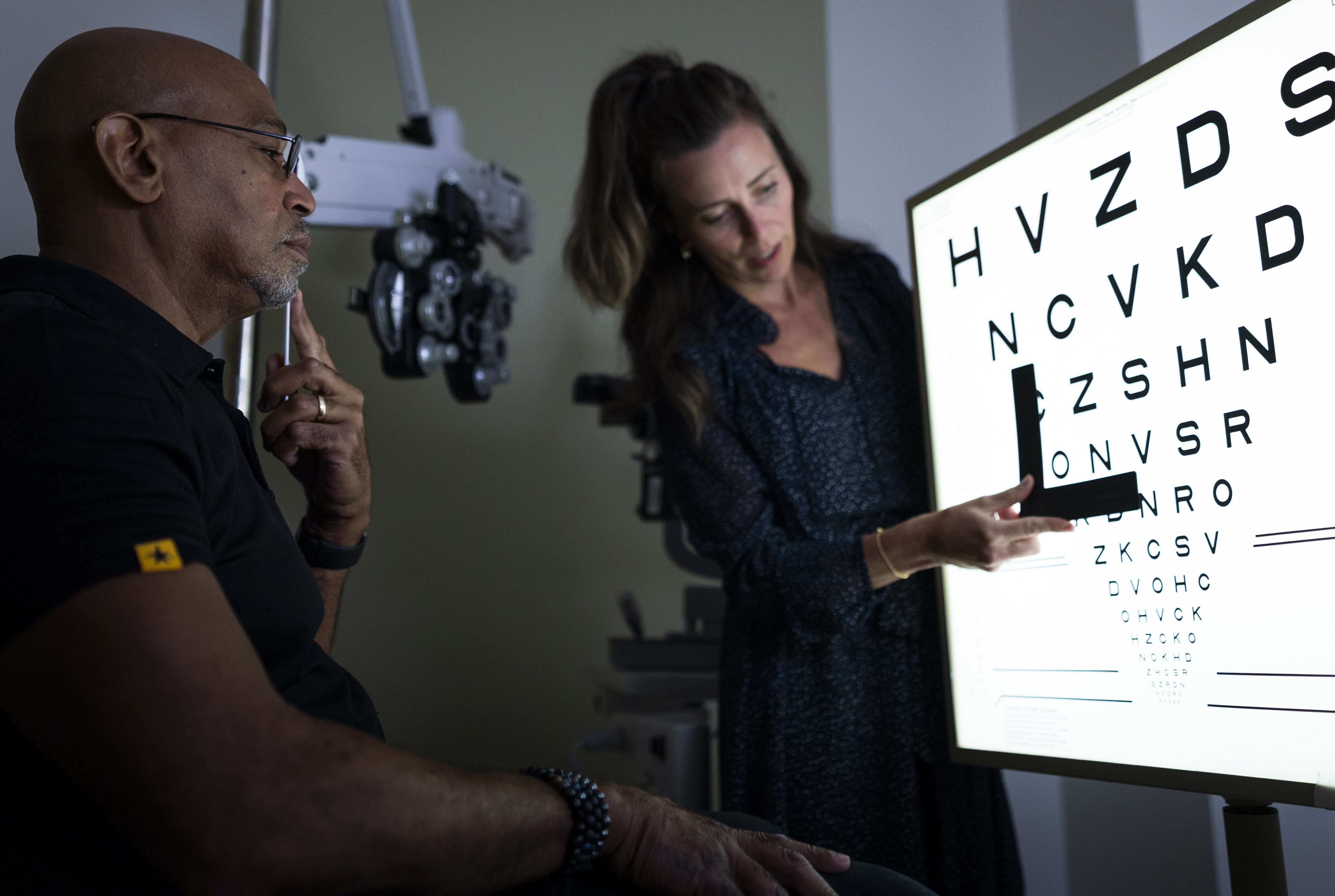
Asking your optometrist questions is crucial for personalized care, early detection of silent diseases like glaucoma or diabetic retinopathy, and understanding how your lifestyle — such as screen time or medication —impacts your vision.
In this three-part series, eye doctors from The Eye Institute (TEI) of Drexel University answer five common questions about eye health, vision changes, and treatment options. Whether you’re wondering about contact lens safety, struggling to read small print or noticing changes in your vision, these expert insights can help you feel more informed and confident at your next appointment.
Is it safe to sleep in my contact lenses?
The short answer is no, you should not sleep in your contact lenses. Sleeping in your contact lenses can lead to severe ocular infections, oxygen deprivation of important ocular structures, and increased risk of damage to your eyes. The best practice is to always ensure you safely remove your lenses every night according to instructions from your eye doctor. There are many different types of contact lenses, so the type of cleaning solution, discarding schedule, and removal regimen can vary between patients.
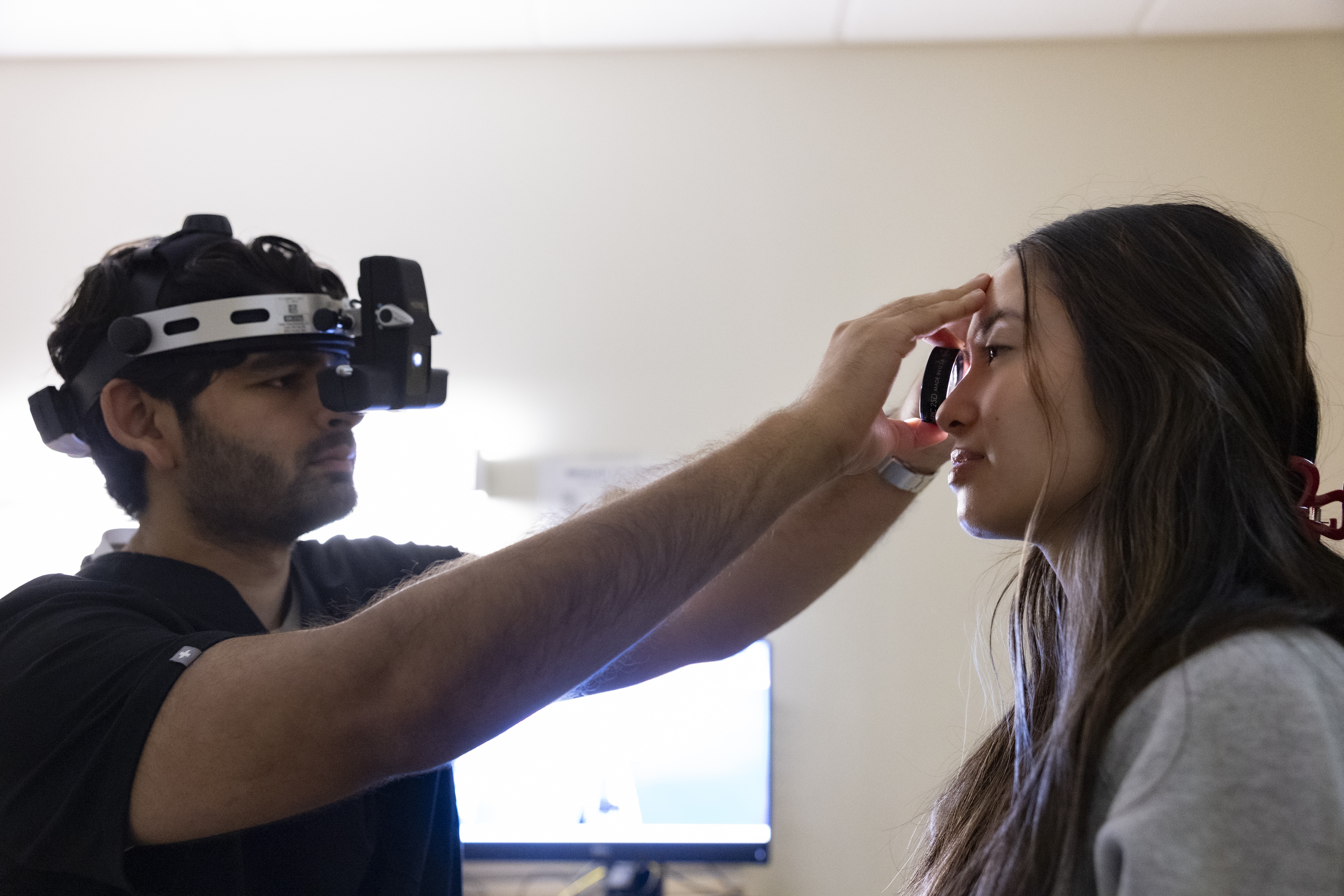 In very few cases, there are special types of contact lenses safe for sleeping. One type is a soft contact lens that is often used to help heal scratches on the front part of the eye called the cornea. In this case, your eye doctor will insert the soft lens in the office, have you wear the lens overnight, and then ask you to return the next day for removal of the lens. The contact lens acts as a bandage to allow for better patient comfort and faster healing time for the wound.
The other special type of lens that allows sleeping is something called an Orthokeratology (Ortho - K) lens. This is a hard contact lens only worn when the patient is sleeping and then taken out during the day. Overnight, the lens helps to reshape the cornea into a specific shape that allows the patient to have clear vision. All lenses for overnight wear are specifically made with high oxygen permeability and safe materials to reduce the risk of complications.
If your eye doctor does not explicitly tell you that you are allowed to sleep in your contact lens, then do not sleep in the lens.
Will wearing glasses make my eyes worse?
This is a common misconception we often hear in the world of eye care: I don’t want to get glasses because I don’t want my vision to get worse! Doctors of Optometry at TEI are here to clear the air: wearing glasses will not make your vision worse or make your eyes weaker. Despite this fact, many patients still feel strongly their eyes have gotten worse since they started wearing glasses, and we completely understand their concern.
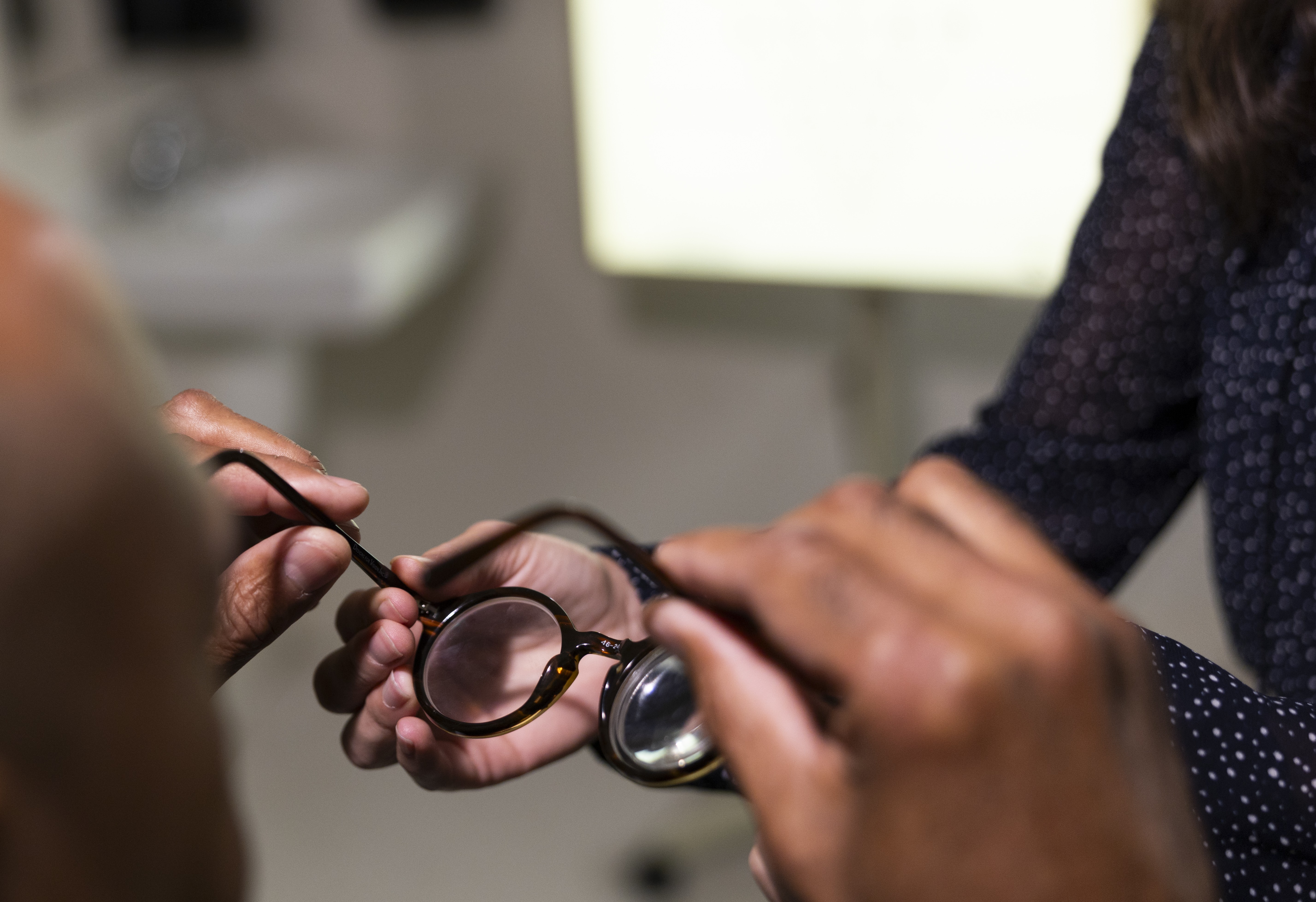 When a patient gets their first pair of glasses, whether they are four or 40 years old, they will see better with the pair of glasses than without them. Before they were prescribed the glasses, the patient was accustomed to how the world looked without them; they likely didn’t even realize how blurry their vision actually was. Once they begin adapting to their glasses and seeing how clear the world can be, when they take off their glasses, they really notice the stark decrease in clarity. This phenomenon can make it feel like your eyes are getting worse or weaker, but really it’s just that you are becoming more accustomed to having clear vision.
Glasses are a safe and effective way to obtain clear and comfortable vision, but if you are having issues with your glasses prescription, make an appointment with an eye doctor at TEI, and they would be happy to help you.
Why can’t I read small print like I used to be able to?
Do you find yourself holding your phone farther and farther away to see it clearly? Or have you started picking up your parent’s reading glasses to read the restaurant menu?
These are common struggles that almost every person will experience at one point in their life.
Around 40 years old, everyone begins to develop something called presbyopia, an eye condition that makes it harder to read or see things up close. Presbyopia does not mean that there is anything wrong with your eyes: it is a normal age-related change that affects 100% of people.
 When we are born, the lens in the middle part of our eye is very flexible, so we are able to accommodate and focus our eyes to see up close. As we age, the lens becomes more rigid and less flexible, so we can no longer accommodate and focus on small prints up close. This process tends to begin around age 40 to 45, but depending on the person, they may begin to notice symptoms either earlier or later.
Many patients feel embarrassed when they begin to develop presbyopia because it makes them feel “like a grandma,” but having presbyopia does not mean you are old or that anything is wrong with your eyes.
Also, there are many different treatment options for patients struggling with near vision. Some patients can get away with just buying over-the-counter reading glasses from a drug store. This is a really affordable and accessible option that can help many people.
Other patients also require a distance prescription in addition to their near prescription, so they would need a pair of glasses with both such as a bifocal or a progressive type lens. A bifocal is a pair of glasses that has the distance prescription at the top of the lens, and the near prescription at the bottom. There is a visible line in the lens that separates the two different prescriptions. Progressive lenses are similar in that they contain the distance prescription at the top and the near prescription at the bottom, but there is no visible line on the lens itself. Contact lenses may also be an option for some patients.
If you are experiencing trouble reading or seeing small print, rest assured that this is a normal part of life that everyone experiences, and there are many different treatment options.
Yet, anytime you experience a loss of vision or sudden blurriness at any distance, consult your eye care provider to rule out ocular disease. Schedule an appointment with an eye doctor at TEI at 215.276.6111 to discuss which option is best for you.