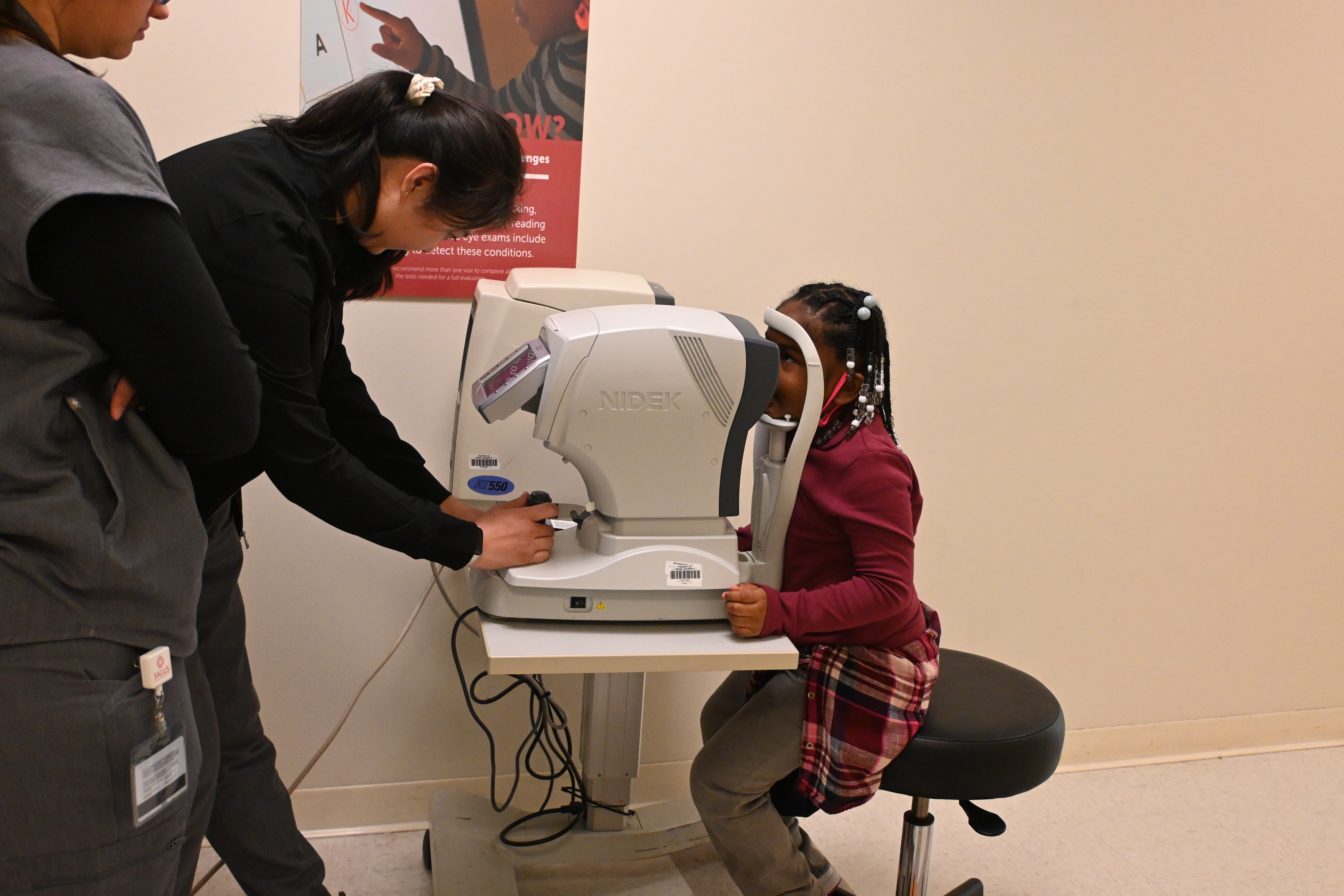
What Parents Need to Know About Their Children’s Visual Health
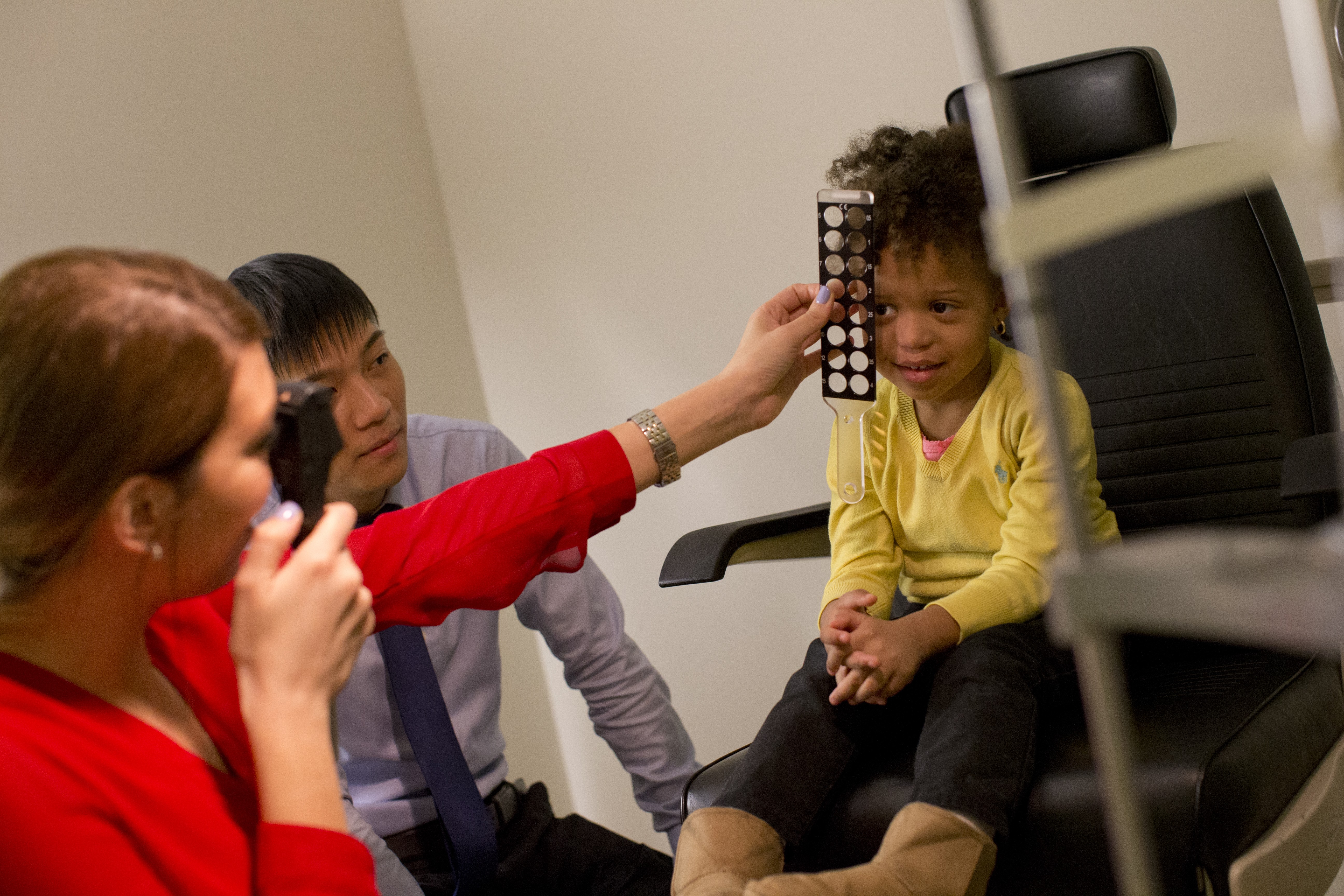
August is Children’s Eye Health and Safety Month. Let’s explore five things all parents should know about their children’s eye health, including what to do if you suspect a vision problem.
Common signs and symptoms of vision problems are especially important to recognize in young children, who may not be able to describe or complain about changes in their vision. It’s important to recognize the warning signs and symptoms:
- Frequent headaches
- Continually rubbing or blinking their eyes
- Covering one eye
- Water or red (inflamed) eyes
- Squints frequently
- Feels dizzy or nauseous while trying to focus
- Sitting close to the TV or holding items close to their face
- Tilting their head to the side
- An eye that turns inwards or outwards
- Seeing double
- Short attention span
- Losing their place while reading
- Using their finger to keep their place when reading
- Difficulty with hand eye coordination while playing sports
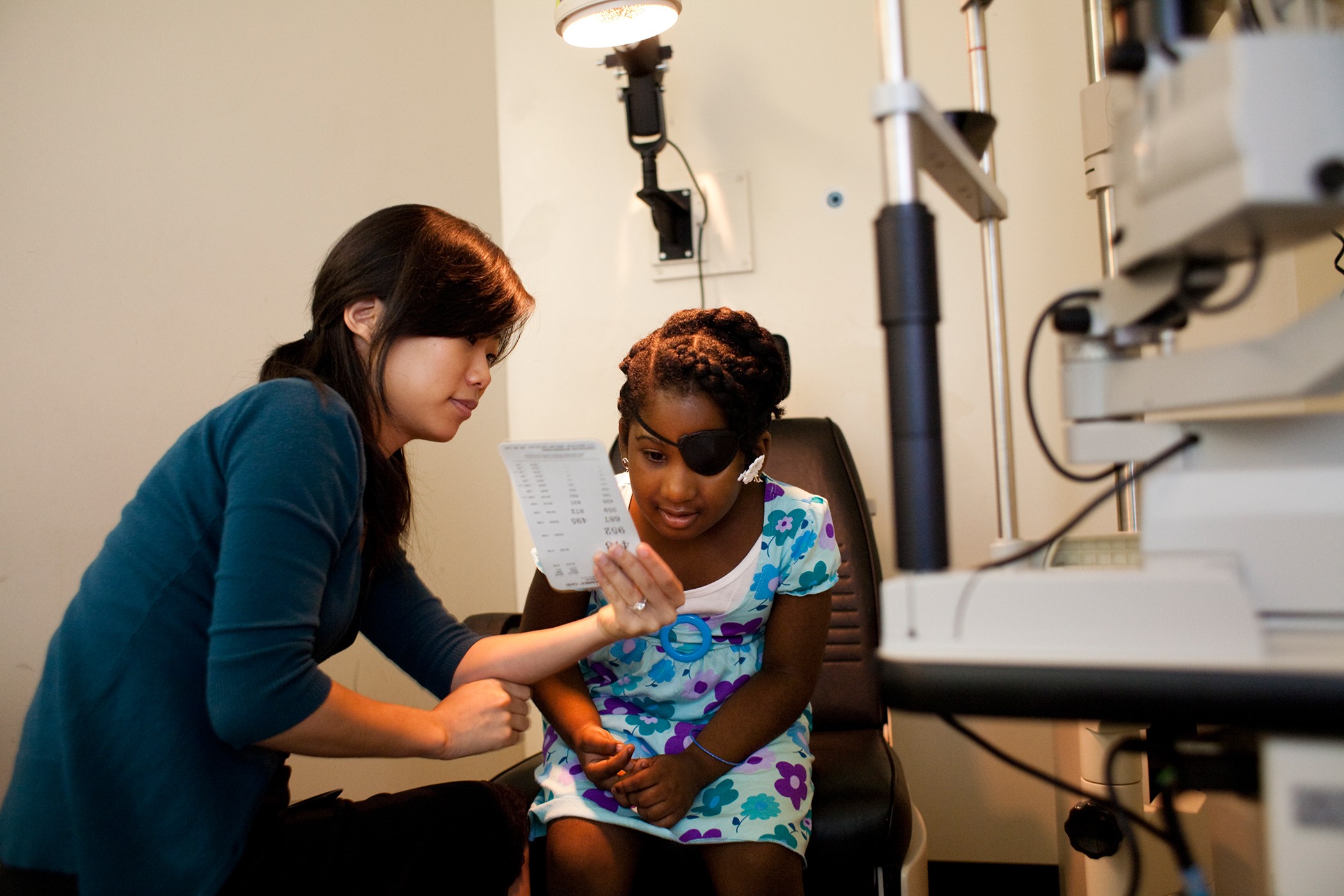 Did you know vision exams are different from vision screenings? School vision screenings or pediatrician screenings typically test for 20/20, and are more limited than comprehensive eye examinations. While vision screenings can detect some changes in eyesight, they are not a substitute for a comprehensive eye exam performed by an eye doctor.
According to American Optometric Association (AOA), approximately 60 percent of vision problems go undetected with vision screenings alone. Experts at The Eye Institute (TEI) of Drexel University want to make sure your child has good visual efficiency (ability to see clearly and comfortably over long periods of time) and visual processing (ability to make sense of incoming visual information). Your child should have their first comprehensive eye exam at six months, then again at age three if there were no problems found at their first exam. By the time they are school-aged, your child should have yearly eye exams with their eye doctor.
Nearsightedness, farsightedness, astigmatism and amblyopia, also known as “lazy eye,” are some of the most common visual disorders in children, according to the American Academy of Ophthalmology.
- Nearsightedness, or myopia, refers to the inability to see distant objects clearly.
- Farsightedness, or hyperopia, prevents someone from seeing near objects clearly.
- Astigmatism occurs when the cornea curves more in one direction than another, causing distorted or blurred vision. Astigmatism can occur in combination with nearsightedness and farsightedness.
- Amblyopia or “lazy eye,” occurs when one or both eyes cannot see 20/20 even after correction with glasses. Amblyopia can be caused by the need for glasses, from an eye turn, or a combination of both.
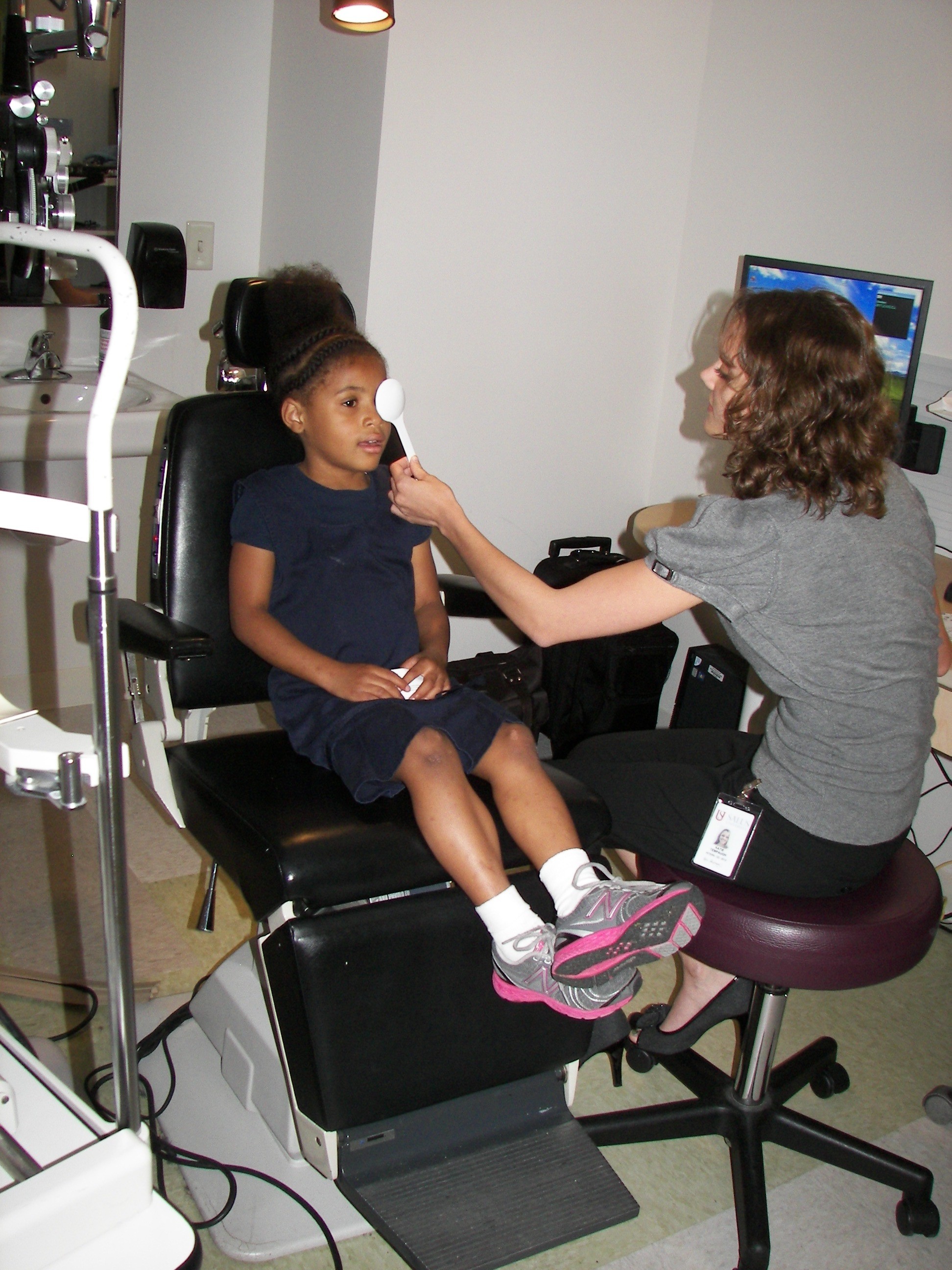 Kids who play sports have an increased risk of injuries to their eyes, as well as concussions. Students are also expected to use screens frequently for schoolwork. Ensure your child wears appropriate protective eyewear while playing sports. If an eye injury or concussion occurs, they should be removed from play and evaluated for any visual complications.
Many concussion symptoms overlap with vision-related symptoms. Any child who experiences a concussion should be evaluated by an optometrist, since vision problems are common with head injuries. With proper care and treatment, most children can safely return to normal activities.Good vision is key to your child’s academic success. Nearly 80 percent of learning occurs through visual activities, according to the AOA.
While reading, children with untreated vision problems may have problems with attention, become fatigued easily, or have difficulty with comprehension. Some kids may avoid reading altogether. Vision problems can interfere with the ability to perform up to one’s potential in school.
How to protect your child’s eye health?
You now know many things that affect your child’s eye sight, but it is also important to know the ways you can protect them. Here are few ways:
- Limit screen time
- Choose the right toy
- Proactive eye wear
- Schedule regular vision screenings and eye examinations
We all know accidents happen. If your child injures their eye, it is important to follow these steps:
- Do not allow the child to rub or touch his or her eye.
- Do not apply any kind of medication to the eye.
- Do not attempt to remove any debris from the eye on your own.
- If a chemical got into your child’s eye, flush the eye with water.
A medical professional should assess all eye injuries; therefore, seek medical attention immediately. Patients requiring emergency care should report to The Eye Institute for triage. Normal operating hours are Monday from 8 a.m. to 4 p.m.; Tuesday from 8 a.m. to 7:45 p.m.; Wednesday from 8 a.m. for 7:45 p.m.; Thursday from 8 a.m. to 4 p.m.; and Friday from 8 a.m. to 4 p.m.
Schedule an appointment with The Eye Institute here or call 215.276.6111.