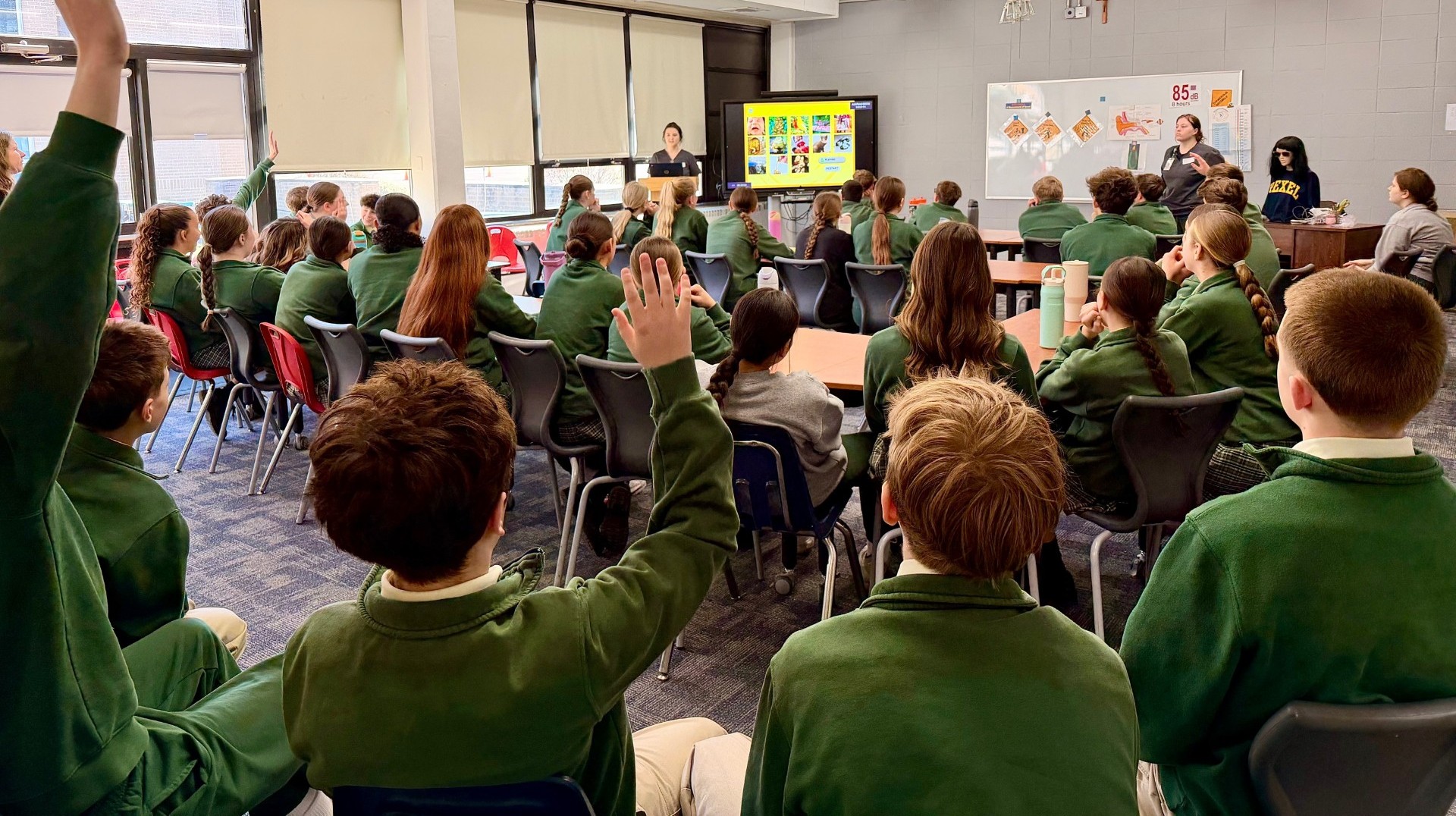
Students from Local School Learn About ‘Dangerous Decibels’
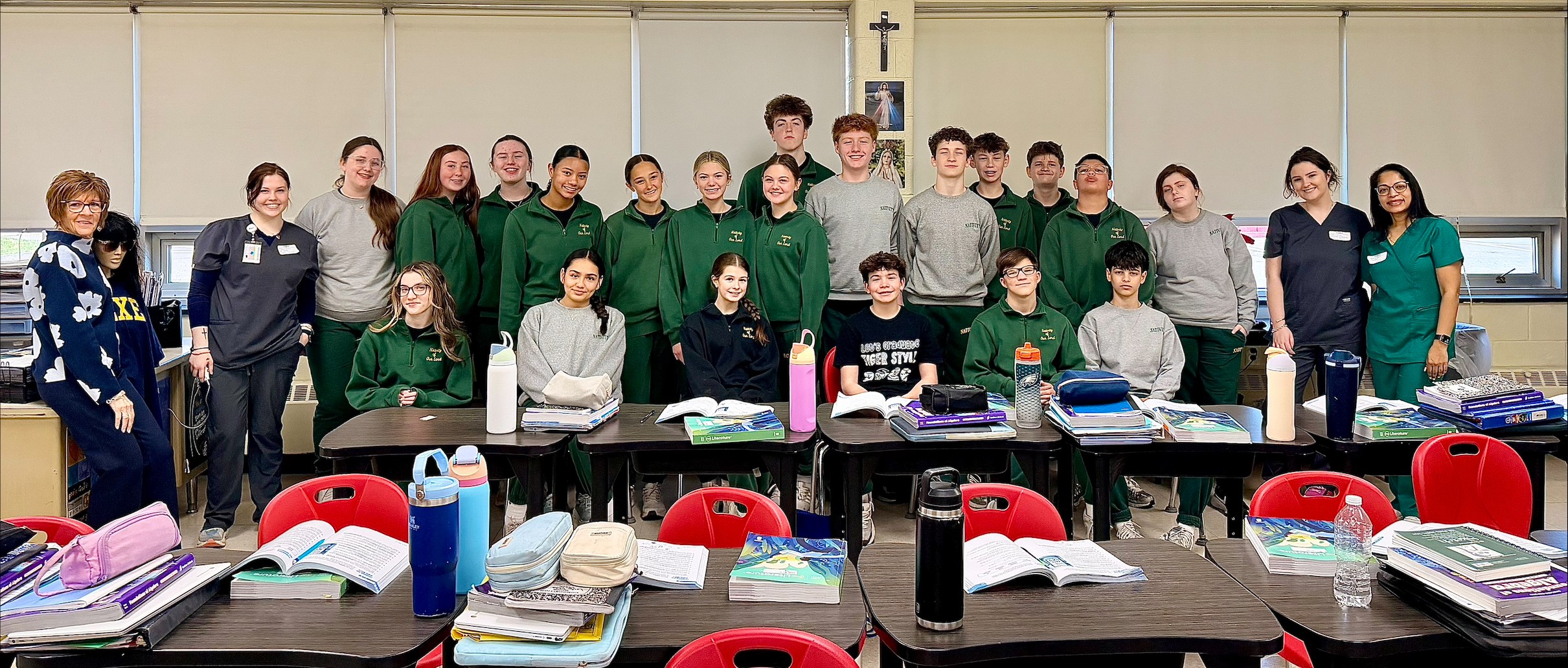
Going into her first Dangerous Decibels classroom presentation, a Doctor of Audiology student, Gabriella “Brie” Chichilitti, expected that it might be challenging for the students of Nativity of Our Lord School in Warminster, Pennsylvania.
“I thought it might be difficult to explain the concepts in a way they would understand and remember. However, during the event, I experienced the opposite,” said Chichilitti. “The students were more interested and interactive than I anticipated. They asked questions, participated in games and discussions, and seemed genuinely curious to learn about how we hear sounds and about how to protect their hearing.”
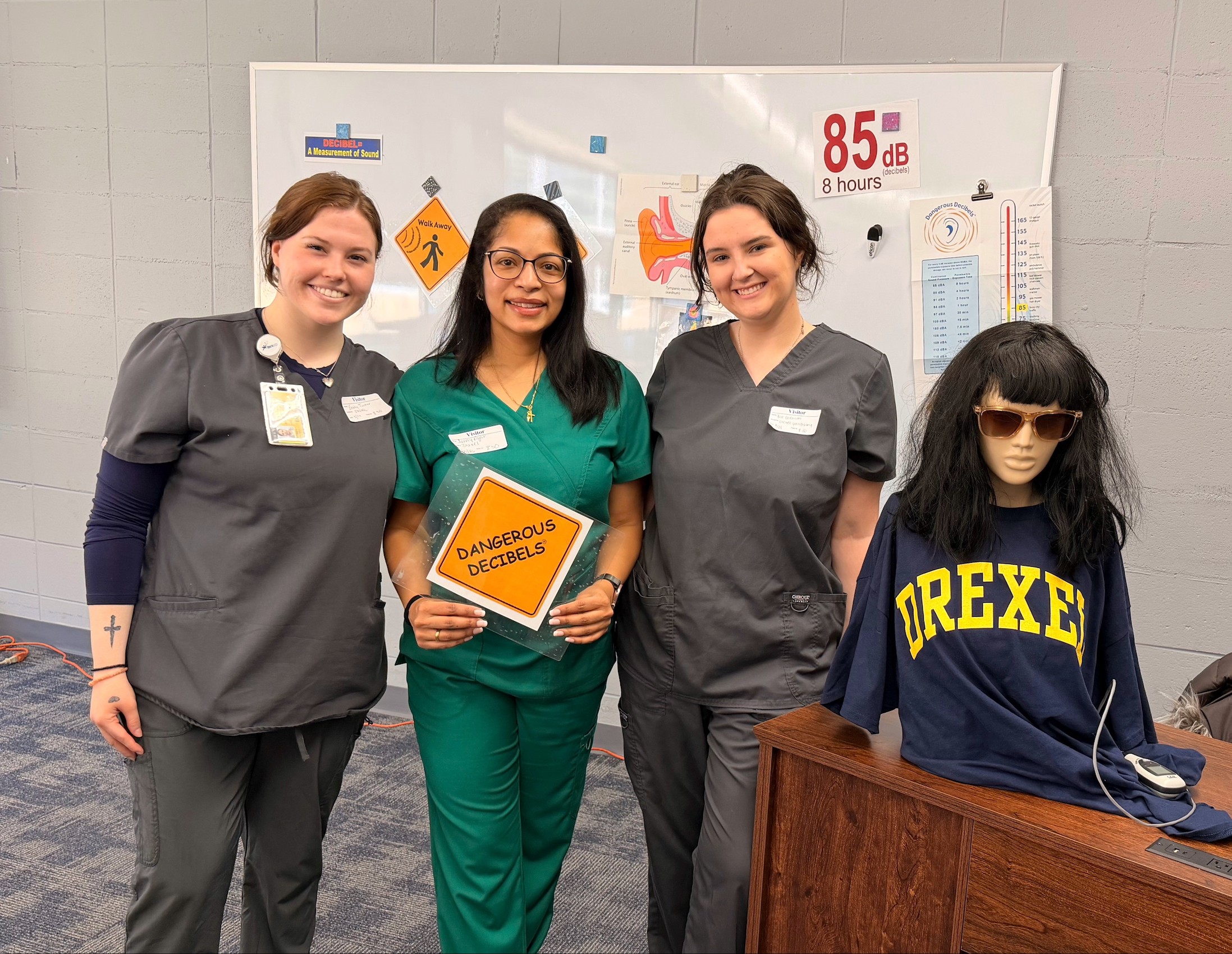 As a trained Dangerous Decibels educator, Dr. Jenny Rajan, pediatric audiologist at the Pennsylvania Ear Institute (PEI) of Drexel University in Elkins Park, Pennsylvania, continues to engage Doctor of Audiology students in these types of experiences.
The initiative emphasizes the vital role of community engagement, highlighting its dual benefit — reinforcing for graduate Audiology students the importance of prevention-focused education within their scope of practice, while providing youth in the community with essential knowledge to reduce the risk of noise-induced hearing loss and protect their long-term hearing health.
As part of World Hearing Day initiatives, Dr. Rajan, along with two Doctor of Audiology students, delivered the Dangerous Decibels classroom program and provided hearing screenings to eighth-graders at Nativity of Our Lord School in March.
“The students were very engaged and volunteered to participate in several scientific experiments – such as demonstrating that sound has power, using a tuning fork and a ping pong ball,” said Dr. Rajan. “They asked great questions about safe listening levels and participated in trivia and role-playing to demonstrate their knowledge of noise-induced hearing loss, hearing protective strategies, and how to handle peer pressure.”
One thing that stood out to Chichilitti, she said, was how the eighth-graders connected the information they were receiving to their own lives.
“For example, a few students mentioned how loud their headphones can be, and it was interesting to see them realize the potential risks,” she said. “Moments like that made the experience feel impactful because it showed they were really thinking about changing their habits.”
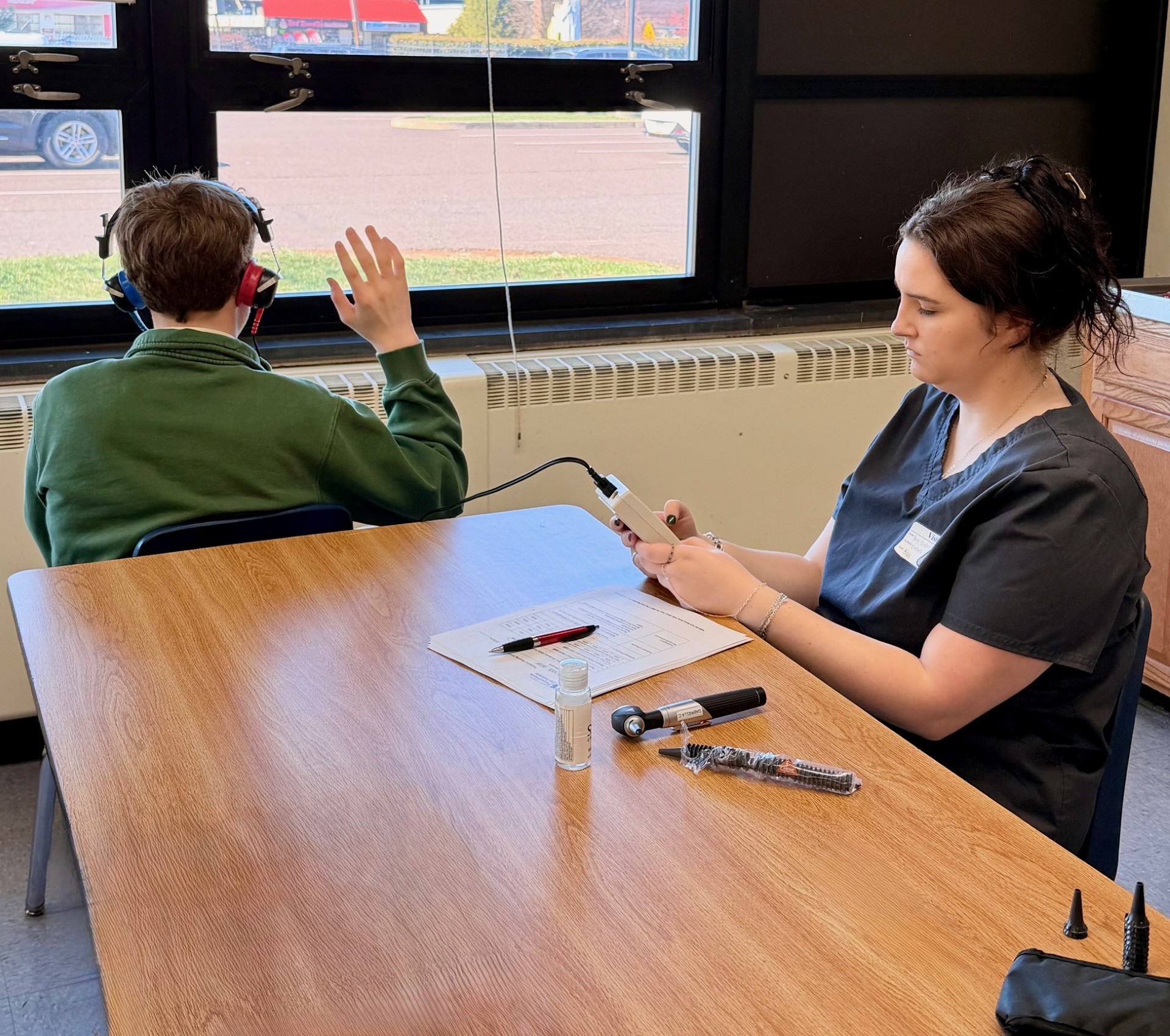 Chichilitti added she learned how important it is to communicate health information in a simple and engaging way, especially for younger audiences, as well as helping her improve her public speaking skills, adaptability, and working with children, increasing her patient care skills.
“Participating in this event helps advance my educational path by giving me real-world experience in health education and hearing loss prevention,” said Chichilitti. “It also supports my future career by strengthening my ability to educate others, which is an important part of the audiology profession.”
According to the World Health Organization, World Hearing Day, celebrated annually on March 3, had the theme "From communities to classrooms: hearing care for all children."
The campaign focused on two imperatives:
- Preventing avoidable childhood hearing loss.
- Ensuring early identification of and care for children with ear or hearing problems
Communities and classrooms are natural entry points to reach children, parents, and teachers. By integrating hearing care into school health initiatives and pediatric care programs, graduate and professional programs like Osborne Audiology at Drexel University can help children hear better, learn more effectively, and thrive both academically and socially.
For a pediatric evaluation at PEI, call 215.780.3180 to make an appointment.